The Spanish Arrive
Spanish records dating back to 1582 show chile cultivation in the New World. During the Antonio de Espejo Expedition into what is now known as New Mexico, Obregon noted, “They have no chile, but the natives were given some seed to plant”. This does not necessarily mean that no chile was grown in New Mexico, as it was an even bigger place than modern day back then. Still, cultivation was most likely not widespread prior to the Spanish arrival.
Landrace Chiles
There are some chile varieties naturally growing in New Mexico, but the history of them is very difficult to accurately represent. Some of the well known varieties are Chimayo, Zia, and Santo Domingo, but there are over 100 known landrace varieties in New Mexico. For more information, I suggest reading this article by Dr Stephanie Walker and Dr Charles Havlik. Dr Havlik in particular has a near obsession with finding new landrace varieties in New Mexico, and has hinted about writing a book about it.
New Mexico Agriculture and Mining
In modern times, this is known as New Mexico State University or NMSU. Historically, there are three major focal points which interlink NMSU chile research to overall chile in New Mexico, with another important player in modern days too, which I will mention towards the end.
Dr Fabian Garcia
Dr Garcia is the godfather of chile in New Mexico, but also Anaheim chile too! Emilio Ortega brought seeds he got from Fabian Garcia to Anaheim and started growing them in California in the early 1900s.
Dr Garcia originally started developing chile in New Mexico in 1888 to produce a product good for canning and use throughout the US. He eventually released Numex no. 9, which is the distinct variety that New Mexico chile cultivars share heritage with.
This variety became a commercial success, with Mountain Pass Canning Co beginning to can New Mexico chile sometime between 1917 and 1921, eventually releasing a brand named “Old El Paso” in 1938. Around this same time, another canning company named Valley Canning Co also released a brand of canned New Mexico chile named Old El Paso. Eventually, Valley Canning was bought by Mountain Pass, and the name Old El Paso was used in canned New Mexico chile for a very long time, producing out of Anthony, NM on the Texas border for decades.
Dr Roy Harper
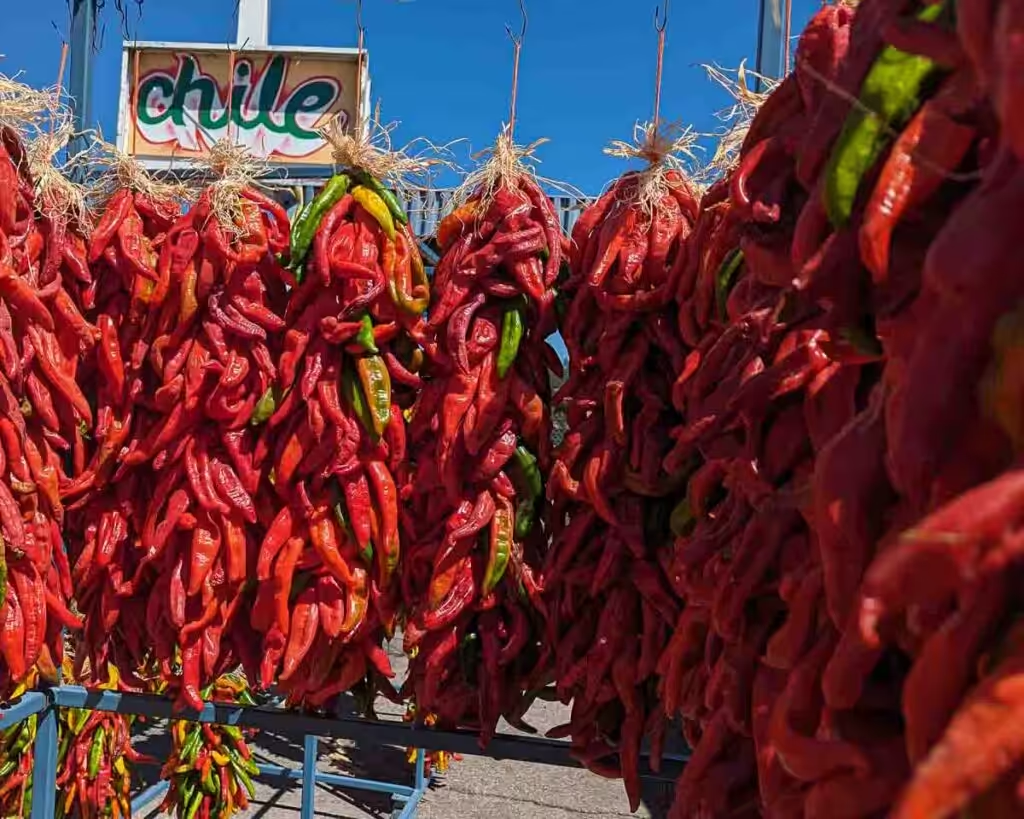
Dr Harper did most of his meaningful work in the 1950s, and is known primarily for the Sandia variety of New Mexico Chile. Sandia, which means watermelon in Spanish, is still prominently featured in the varieties of New Mexico chile to this day. It is the best chile we have to tie into red chile ristras. It’s also one of the most common varieties of red chile for making red chile sauces, a necessary part of tamales, posole, enchiladas, and carne adovada! Dr Harper also released Numex no. 6, which is the predecessor to Numex 6-4, which is a super popular mild chile variety to this day.
Dr Roy Nakayama
About 20 years after Harper, Nakayama released perhaps the most famous New Mexico chile of all time, Big Jim, named after Big Jim Lytle in 1975. In addition to this, he also released some great parika varietals too! The release of Big Jim coincided with the beginnings of the Hatch Chile Festival, and New Mexico chile reached a critical mass that started a revolution.
The revolution of New Mexico chile
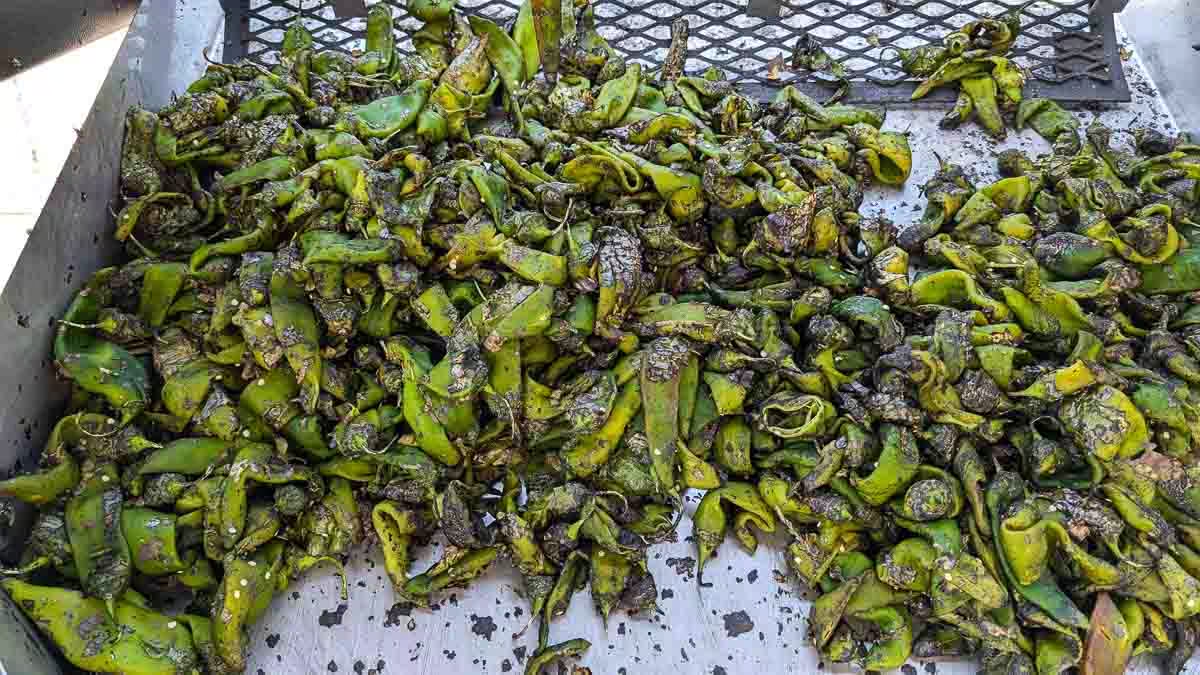
That revolution? Chile roasting! Prior to the 1970s, although people roasted chile, they did it at home… slowly. in the 1970s, the concept of chile roasting as a service spread throughout New Mexico. With big barrel roasters blasting jets of flame through the chile while spinning the drum, it allowed even cooking and peeling of chile, saving a lot of work for the average New Mexican getting their chile. Nowadays during chile season, you can hardly go a few blocks without seeing a chile roaster set up during the chile season.
New Mexico Chile In Modern Times
Nowadays, New Mexico chile is continuing to grow and improve, with new varieties like Lumbre, developed by the Lytle family, and Ms Junie, named for June Lytle Rutherford improving both heat and roasting qualily.
New Mexico State University’s Modern Impact
NMSU continues to provide a lot of support for the chile industry in New Mexico, working together with farmers to develop pathogen and environmental stress resistant chile. Additionally, they work to revitalize old varieties such as Heritage Big Jim or Heritage 6-4. A lot of the modern work can be credited to Dr Paul Bosland.
Dr Paul Bosland
Perhaps most famous for his work in bringing the Bhut Jolokia or Ghost Pepper to worldwide acclaim, confirming it to have broken the million Scoville Mark, Dr Boland has also has a large impact on New Mexico chile. He created the Chile Pepper Institute, the world’s only international, non-profit organization dedicated to the research and education related to capsicum in 1992. He’s released more than 42 varieties of chile peppers, including some of the improved varieties mentioned above.
The Future Of New Mexico Chile
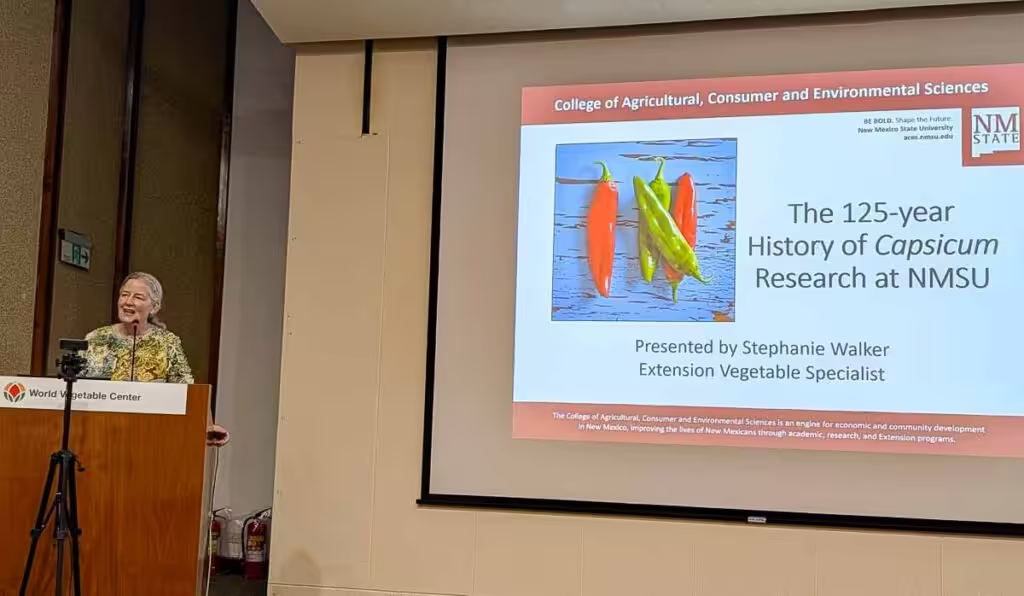
One of the most promising improvements in chile production in New Mexico will likely come out of NMSU as well, and that is machine harvesting. As of now, dried red chile is often machine harvested in the Hatch region, but mechanical or robotic harvesting of chile is still essentially nil in New Mexico. Dr Stephanie Walker presented about her trials with an inclined double helix harvester which shows promise with harvesting the Numex Odyssey variety at the 2026 International Pepper Conference that I attended in Bangkok. Additionally, Dr. Mahdi Haghshenas-Jaryani will be presenting work on use of robotics in precision farming at the 50th New Mexico Chile Conference. Considering how much of the cost of chile production in New Mexico is labor, improvements in automation have huge potential to once again revolutionize the chile industry!
Further reading
To learn about some of the chile cultivars released by NMSU, read this!

