Before, during, and after the Hatch chile season, I’m on the road quite a bit. There are several reasons for this, but perhaps the most important one is that I care a lot about maintaining high quality of products in my store. If you see a product at my chile stand, you can almost certainly bet I’ve personally visited the supplier on their farm or processing facility.
Locations I visit in New Mexico
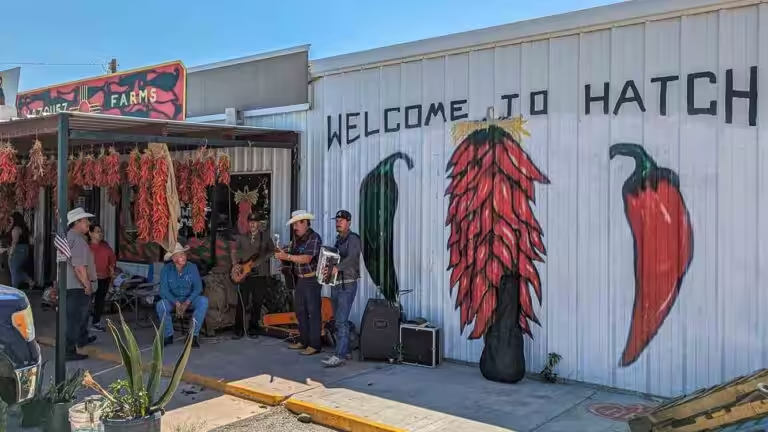
Hatch
The number one place I visit in New Mexico is probably Hatch, as I go there to restock various things like chile pods and chile powders, along with the occasional order of ristras. More than that, I like to visit farms of my suppliers to get a better sense of what is happening with the plants each season.
Las Cruces
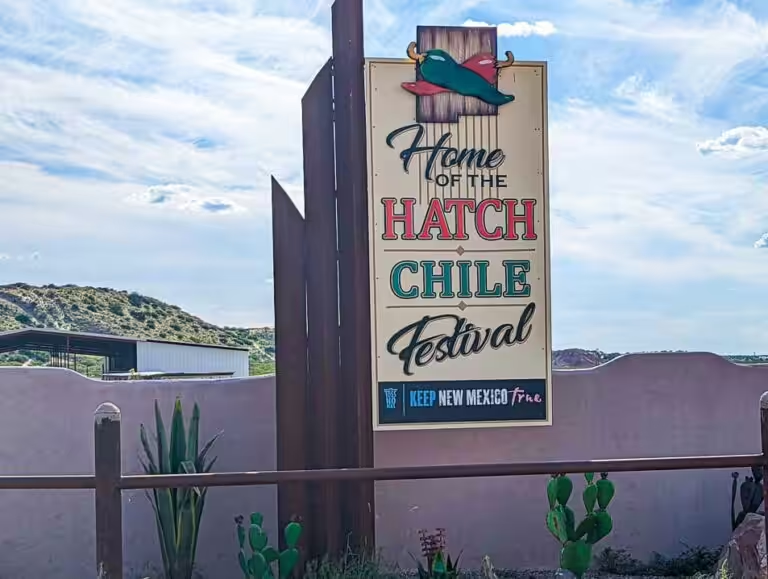
I typically visit Las Cruces two or three times a year. Part of the reason is it’s a good place to stay during the Hatch Chile Festival. Another reason is I like visiting the Chile Pepper Institute at NMSU. They have plenty of information about chile, including the history of its cultivation in New Mexico, important cultivators, and a good selection of New Mexican cookbooks.
Socorro and San Antonio
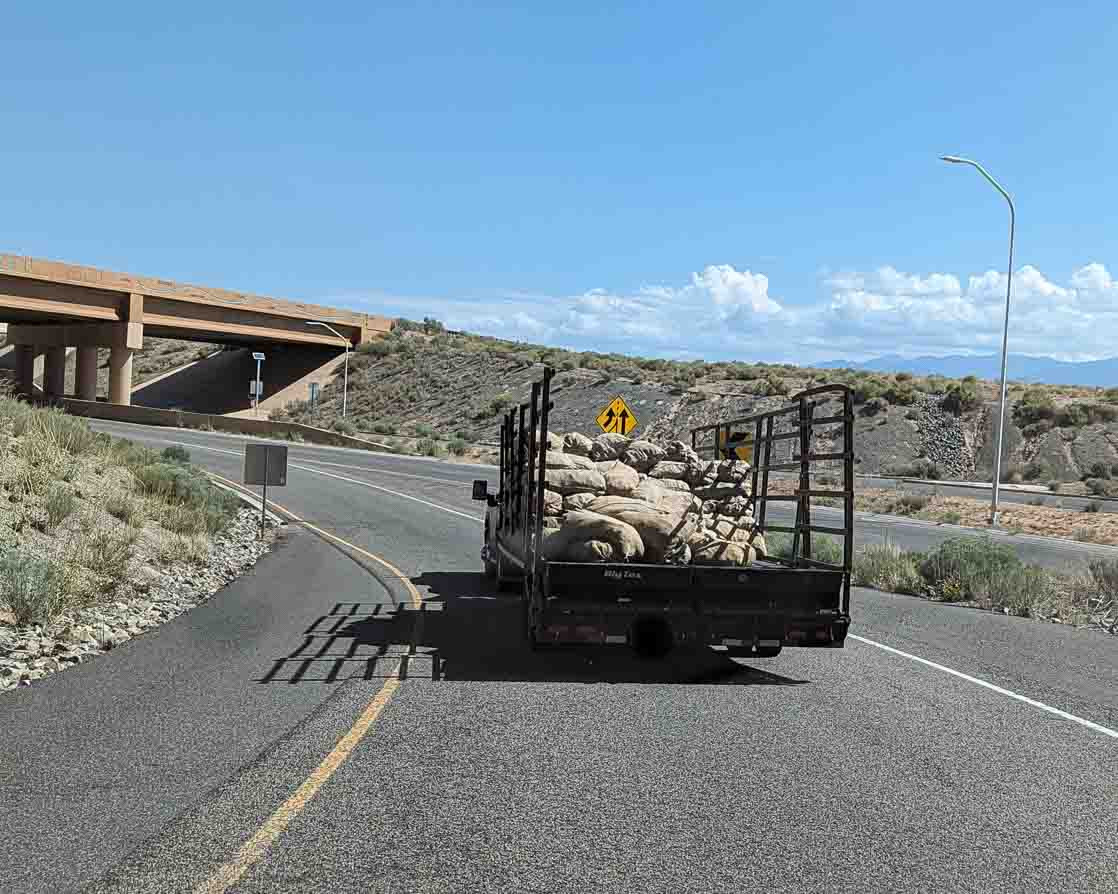
We get a large amount of our fresh green chile in September from Snake Ranch who grows some of the highest quality chile around. We also get cantaloupes, honeydews, and tomatoes here, and I take a pickup truck full a few times a season. This area is about halfway between Albuquerque and Hatch, and has some fantastic restaurants serving up some of the best green chile cheeseburgers in the state!
Espanola and Chimayo
I go up to these areas north of Santa Fe a few times a year. We get chicos and Chimayo chile powder up there. Occasionally if time permits, I will also swing by Los Alamos too. There are some very well known resort casinos up on this area, but I don’t gamble so I rarely stop in for more than fuel.
Gallup
Gallup is a well know trading town near the border of Arizona. It is right on the edge of Navajo Nation, and has a lot of different things for sale. Particularly, I come out here looking for pinon nuts when they start coming into season in the Fall. More than just that, they also have plenty of Native art, jewelry, and food available. I highly recommend visiting the flea market here.
Locations I visit in Colorado
Dove Creek
Dove Creek is home to Adobe Milling Company, which is where we get our Anasazi Beans and Bolita Beans. They have also recently expanded their line of products to also include hot sauces and spice mixes. I can say they are quite good!
Cortez
Cortez is a charming town not too far from Farmington, New Mexico, and it is where we pick up Blue Bird Flour. This flour is really popular among New Mexicans for making sopaipillas among other things! Cortez also has a very charming downtown and is not far from Durango.
Where I go in Texas
I typically go to El Paso two or three times a year to pick up a variety of chile peppers and spices from Mexico! I try very hard to keep as many kinds of chilies as possible so people who love this beautiful pepper can find exactly what they are looking for. Although Tex-Mex doesn’t hold a candle to New Mexican food, Texas does have a long border with one of the biggest chile growing regions in Mexico, and a couple great border crossings logistically. Considering El Paso is also on the border with New Mexico, it’s a great place for me to stop by for more diverse offerings!
Arizona?
As of now, I have yet to do any business related activities in Arizona. That being said, there is a farm there which specializes in producing seeds that many farmers in New Mexico get chile seeds from. I would have gone there last year if not for a conflicting event at New Mexico State University. I will likely go visit Ed Curry’s farm in 2026!
Where I go abroad
Mexico
Although I am not a direct importer of chile from Mexico and source my products from a company in El Paso, I do frequently visit Mexico to learn more about the food culture and chile varieties available. The states of Chihuahua and Sinaloa in particular grow many different chile varieties, and I fly down and rent a car to visit major growing regions nearly every year. In addition, I love visiting Jalisco, Oaxaca, and Mexico City to see new trends in the Mexican culinary scene. Mexico has a vast amount of heirloom chile peppers similar and yet quite distinct from the chiltepin that are always interesting to learn about.
Japan
I’ve lived in total about two years in Japan, and am a big fan of the culinary scene there. Something special about Japan is how rare it is to find a bad restaurant. It is a culture which seeks perfection in many different ways. Unfortunately, there isn’t much tolerance for spicy food among Japanese, so it isn’t terribly relevant to my business. That being said, there are some concepts and ideas I might bring to my shop in the coming years. For people looking for spice in Japan, I recommend checking out Fiesta Farm in Chiba Prefecture about 30 minutes outside Tokyo. It’s a pretty easy trip from the Tokyo Disneyland area! Additionally, there are many new varieties of peppers that are becoming popular in Japan. Gone are the days when shishito was the only pepper around!
Vietnam
Vietnam is another country I have spent about two years total in. I grow some peppers there which are produced into specialty sauces for a restaurant I work with. Unlike Japan, chili peppers are a huge part of the food culture here. Almost every restaurant in the country will have a few different ways to have chilis, whether it is fresh, crushed, or mixed with lemongrass and made into a satay sauce. One limitation of Vietnam is that the agriculture system is very ad hoc. There isn’t a lot of coordination between farmers and distribution, along with limited logistics and cold chains available. This means that although many different chile peppers are available in Vietnam, they aren’t available in the same place. This means the regional differences can be huge. It’s always interesting to ride my motorcycle into the countryside and find new types of chile peppers that are only grown there. This uniqueness is even more pronounced in archipelago like the Philippines or Indonesia which have tons of landrace varieties.
Thailand
I frequently visit Thailand as it has become one of the main hubs for conventions in Asia. It was the location for the 2026 International Pepper Conference which I attended as well. During this conference, we visited the testing farm of the World Vegetable Institute and saw many new seed varieties they were testing in the Southeast Asian climate. During this event, we also visited the largest wholesale market in Southeast Asia, where I saw the most varieties of chile peppers in one place. There were likely more than 50 different varieties available in huge quantities! I also sampled a few, but you can only have too many spicy peppers before your senses get pretty dull!
Korea
Korea has arguably the highest level of chile culture in East Asia, although many areas in China are also big spicelovers. In Korea, the most well known type of chile is known as the Cheongyang chili pepper, though the Jeju pepper is becoming more and more renowned recently. I learned a lot about this while I was working with MBC, a South Korean TV station, filming the New Mexico part of a documentary series on chile peppers. They also visited Bolivia, Mexico, Hungary, and Louisiana for other parts. In addition, I met a good amount of pepper breeders and geneticists from Korea, and will visit them in the future to learn more about peppers!
South America?
As of now, I have never been to South America. It is definitely on my agenda in the near future however, as it is the birthplace of the chili species. There are an immense amount of landrace varieties there, and seldom seen types like capsicum frutescens, pubescens, and baccatum. For reference, New Mexico chile is capsicum anuum, which is by far the most prevalent cultivar as it is easy to breed and grow. I need to improve my Spanish before I go, because I will certainly be riding a motorcycle around rural mountains where no one speaks English. In my opinion, this is a big aspect of my life that I need to improve, but I will get there with time and increased effort. I plan to spend a few months boondocking the countryside by motorcycle in countries like Peru, Bolivia, Paraguay, and Uruguay. It’s always the rural areas you find the most special peppers.